What is a Trade Apprenticeship
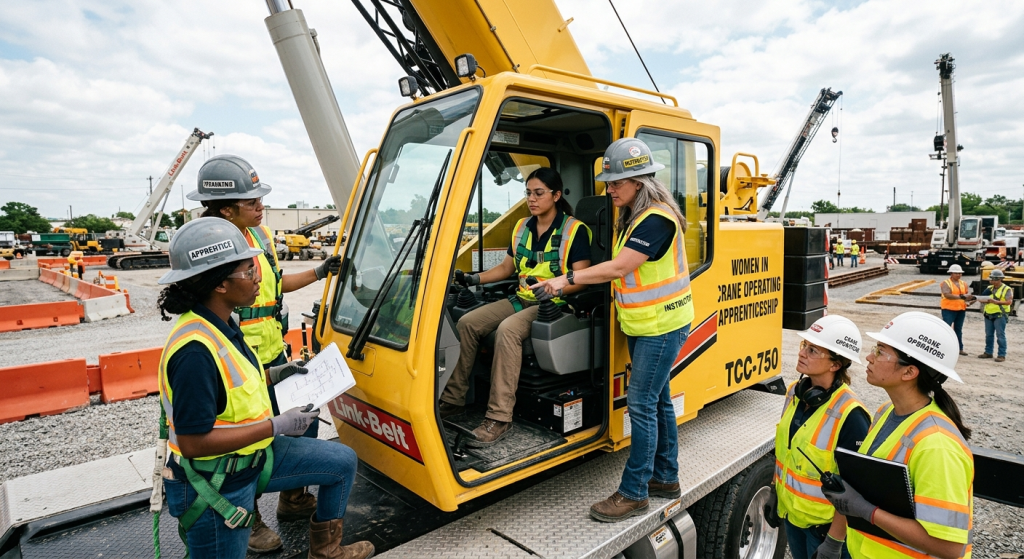
Trade Apprenticeship
A trade apprenticeship is an industry-driven, work-based learning model that allows workers to gain hands-on training and classroom instruction while earning a full-time wage.
Registered Apprenticeships (RAPs): Programs verified by the federal government (U.S. Department of Labor) or a State Apprenticeship Agency. These ensure strict safety protocols, standardized curricula, guaranteed wage schedules, and a portable national credential upon completion.
Length: Typically lasts between 2 to 5 years, depending on the trade, requiring 2,000 hours of on-the-job training per year alongside a minimum of 144 hours of related classroom instruction annually.
Key Pre-Apprenticeship Pathways
For candidates needing preliminary preparation, Registered Pre-Apprenticeship Programs offer short-term training (typically 6 weeks to 6 months). They teach entry-level trade math, basic tool safety, and physical conditioning. Many pre-apprenticeships—especially those focused on women and underrepresented groups in construction—offer direct-entry agreements into formal union or non-union apprenticeships.
Top Skilled Trades with Apprenticeship Pathways
According to the U.S. Bureau of Labor Statistics, these key trades offer high-demand apprenticeship tracks:
- Electricians: 4 to 5 years. Focuses on electrical wiring, power systems, control systems, and code compliance. (Median annual wage: ~$62,350; top 10% earn $108,000+).
- Plumbers, Pipefitters, & Steamfitters: 4 to 5 years. Focuses on high-pressure piping, drainage, industrial flow, and gas systems. (Median annual wage: ~$63,800; top 10% earn $101,000+).
- HVAC/R Technicians: 3 to 5 years. Covers heating, cooling, refrigeration, airflow mechanics, and micro-electronics. (Median annual wage: ~$60,000).
- Elevator Installers & Repairers: 4 years. Involves complex hydraulic, mechanical, and electrical systems. (Median annual wage: $102,420).
- Crane Operators & Heavy Equipment Mechanics: 3 to 4 years. Covers heavy machinery operation, rigging, signaling, and mechanical load calculations.
Key Elements of a Registered Apprenticeship
- Earn While You Learn (Paid from Day 1): You are an employee on the company payroll from day 1. You do not take on tuition debt to complete the program.
- Progressive Wage Scale: Pay increases automatically as you reach specific skill tiers and hour benchmarks. Starting wages typically begin at 40% to 60% of a fully qualified worker’s pay and scale up step-by-step to 100%.
- On-the-Job Training (OJT): Practical learning conducted directly on active job sites under the 1-on-1 supervision of experienced professionals (Journeyworkers).
- Related Technical Instruction (RTI): Academic and classroom coursework covering blueprint reading, safety regulations (OSHA), trade mathematics, and codes. This is delivered through union training centers, community colleges, or vocational institutes.
- Nationally Recognized Credential: Graduates receive a Certificate of Completion of Apprenticeship (or Journeyman Card). This credential is fully portable across all 50 states without requiring re-testing or re-certification if you relocate.
Key Benefits of an Apprenticeship
1. Zero to Minimal Student Debt
Because you are earning a paycheck throughout your training, tuition and equipment costs are usually covered by the employer, joint-apprenticeship committee, or union. Most apprentices graduate with zero educational debt.
2. Immediate Earnings with Guaranteed Raises
Rather than paying tens of thousands of dollars to attend school for 2–4 years without income, apprentices start earning money immediately. Wages start at a percentage of a fully qualified worker’s pay (typically 40%–60%) and increase step-by-step as skills and hours accumulate.
3. Real-World Experience and Mentorship
You learn in actual work environments rather than relying strictly on textbooks or simulated labs. Having a dedicated mentor ensures you learn proper techniques, safety protocols, and industry standards direct from experienced professionals.
4. High Job Security and Direct Career Placement
Apprenticeships are sponsored by businesses that actively need workers. Most apprentices remain with their sponsoring employer after graduating, bypassing the job hunt and post-graduation unemployment or underemployment.
5. Portable, Industry-Standard Credentials
A completed Registered Apprenticeship program awards a credential valid across the country. This certification proves your skill level to any future employer nationwide without needing to re-test or re-certify from scratch.
6. High Return on Investment (ROI)
According to data from the U.S. Department of Labor, the average starting salary for a fully qualified graduate of a Registered Apprenticeship program exceeds $80,000 per year, providing an exceptionally high short- and mid-term return on investment without student loan burdens.
Types of Apprenticeships
- Registered Apprenticeship Programs (RAPs): Validated by the federal government (U.S. Department of Labor) or a state apprenticeship agency. These offer strict quality guarantees, standardized safety criteria, and federally recognized certifications.
- Industry-Recognized Apprenticeship Programs (IRAPs): Developed and managed by private industry associations or corporations to meet specific company needs.
- Pre-Apprenticeship Programs: Short-term preparatory programs designed to help individuals build baseline math, reading, and basic technical skills required to pass entry tests for formal apprenticeships.
Key National Statistics & Data
| Metric | Official U.S. Statistic / Data Point | Primary Source |
| Active U.S. Apprentices | ~680,000 active registered apprentices | U.S. Department of Labor |
| Average Graduate Salary | ~$80,000/year average starting salary upon graduation | U.S. Department of Labor |
| Employment Retention Rate | 93% of apprentices retain employment after completing their program | U.S. Department of Labor / Apprenticeship.gov |
| Average Total Student Debt | $0 to minimal (employers/unions cover training expenses) | Federal Reserve / BLS |
| Industry Breakdown | Construction/Building Trades represent ~36% of all registered apprenticeships | DOL / High5Test Analysis |
| Women in Apprenticeships | Female representation has grown, accounting for ~14% of active apprentices | U.S. Department of Labor |