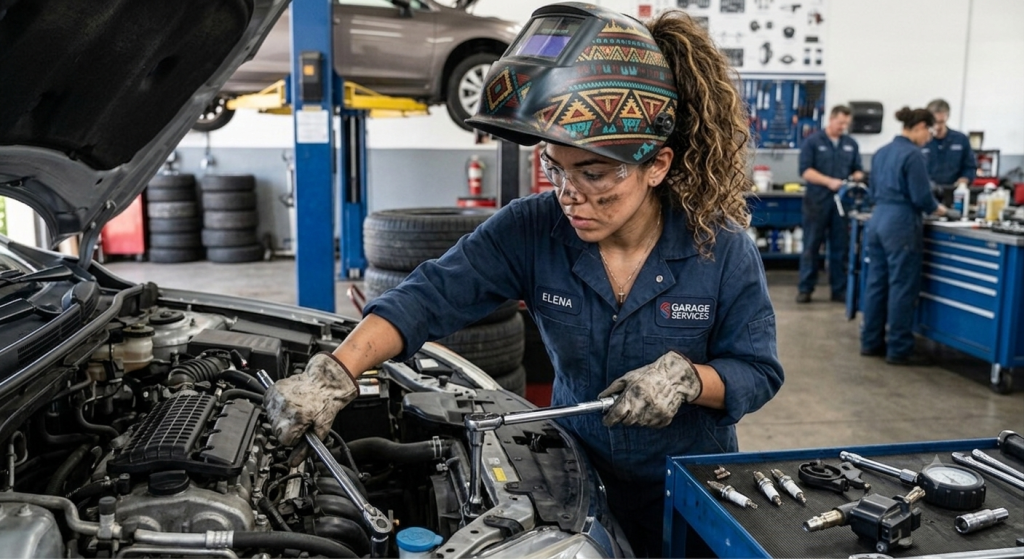
Automotive
The automotive trade is a broad, highly technical field focused on the inspection, maintenance, repair, and modification of motor vehicles. As vehicles have evolved into complex computerized machines, the trade has expanded far beyond traditional mechanical work to include advanced electronics, software diagnostics, and alternative fuel systems.
Training, Certifications, and Industry Pathways
- Education & Apprenticeships: Most practitioners enter the field through trade school diploma or associate degree programs (ranging from 10 months to 2 years) or through direct entry-level apprenticeships.
- Industry Certifications:
- ASE (Automotive Service Excellence): The standard professional certification covering specific areas like Engine Repair, Brakes, Electrical, and Heating/AC.
- I-CAR Certification: The industry standard certification for collision repair professionals.
- OEM / Factory Training: Dealer-level specialized training programs provided directly by vehicle manufacturers (e.g., Ford, Toyota, GM).
- Key Skills Required: Strong mechanical aptitude, logical problem-solving/troubleshooting, spatial reasoning, computer literacy, and attention to safety standards.
Key Areas & Specializations
The automotive trade spans several key sectors and specialties:
- General Automotive Service & Diagnostics: Maintenance and repair of mechanical systems, including engines, transmissions, brakes, suspension, steering, and HVAC systems. Technicians routinely use computerized diagnostic equipment to identify hardware and software issues.
- Collision Repair & Refinishing: Exterior structural and cosmetic repair following accidents. Work includes frame straightening, panel replacement, dent removal, welding, auto body painting, and glass installation.
- Automotive Electrical & Electronics: Focuses on wiring harnesses, engine control units (ECUs), sensor networks, lighting, infotainment, and advanced driver-assistance systems (ADAS).
- Electric Vehicles (EV) & Hybrids: High-voltage systems, electric drivetrains, battery management, and thermal management systems.
- Diesel & Heavy-Duty Machinery: Repair and maintenance of light-to-heavy commercial trucks, buses, construction equipment, and agricultural machinery.
- Performance & Customization: Upgrading suspension, engine tuning, fabrication, and restoring classic or specialized vehicles.
Current Industry Trends
- Software and Telematics: Modern vehicles run dozens of interconnected microcontrollers. Diagnostics now rely heavily on software interpretation alongside physical tools.
- High-Voltage Safety: The growth of EVs requires technicians to undergo specialized safety training for working with high-voltage battery banks.
- ADAS Calibration: Post-repair recalibration of radar, camera, and lidar systems is becoming standard in collision and alignment work.
Common Career Roles
Within auto shops, dealerships, and industrial facilities, trade roles range from hands-on wrenching to customer service and management:
| Role | Core Responsibilities |
| Automotive Technician / Mechanic | Diagnoses, services, and repairs mechanical and electronic components. |
| Collision Repair Technician | Repairs damaged body panels, frames, and structural components. |
| Auto Electrician | Specializes in electrical systems, diagnostics, and electronic recalibrations. |
| Service Advisor / Estimator | Acts as the liaison between clients and technicians; prepares cost estimates. |
| Parts Specialist / Manager | Manages inventory, sources OEM and aftermarket components, and coordinates sales. |
| State Inspector / Smog Technician | Performs regulatory safety and emissions inspections to certify roadworthiness. |